20 Natural Ingredients Every Dog Owner Should Know: The Good and the Bad
Posts You May Like
20 Natural Ingredients Every Dog Owner Should Know: The Good and the Bad
When it comes to choosing the best food and treats for your dog, understanding natural ingredients for dogs can make all the difference. Every ingredient has a purpose, but not all ingredients provide the same nutritional value. Some healthy dog food ingredients can support digestion, skin and coat health, energy, and immune function, while other ingredients should be limited or avoided altogether.
Learning to identify both beneficial ingredients and ingredients to avoid in dog food empowers you to make informed decisions every time you shop. Whether you're reading a dog food label or selecting wholesome treats, knowing what belongs—and what doesn't—can help your dog enjoy a healthier, happier life.
This guide covers 20 important ingredients every dog owner should know, divided into two sections: 10 ingredients that are beneficial for most dogs and 10 that deserve caution or should be avoided.
Why Ingredients Matter
The quality of your dog's food begins with its ingredients. While many commercial dog foods are formulated to be complete and balanced, ingredient quality varies between brands. Reading labels carefully helps you understand exactly what you're feeding your dog.
High-quality ingredients can support:
- Healthy digestion
- Strong muscles
- Healthy skin and a shiny coat
- Immune function
- Healthy weight
- Energy levels
- Overall wellness
Choosing foods with simple, recognizable ingredients also makes it easier to understand what's in your dog's bowl.
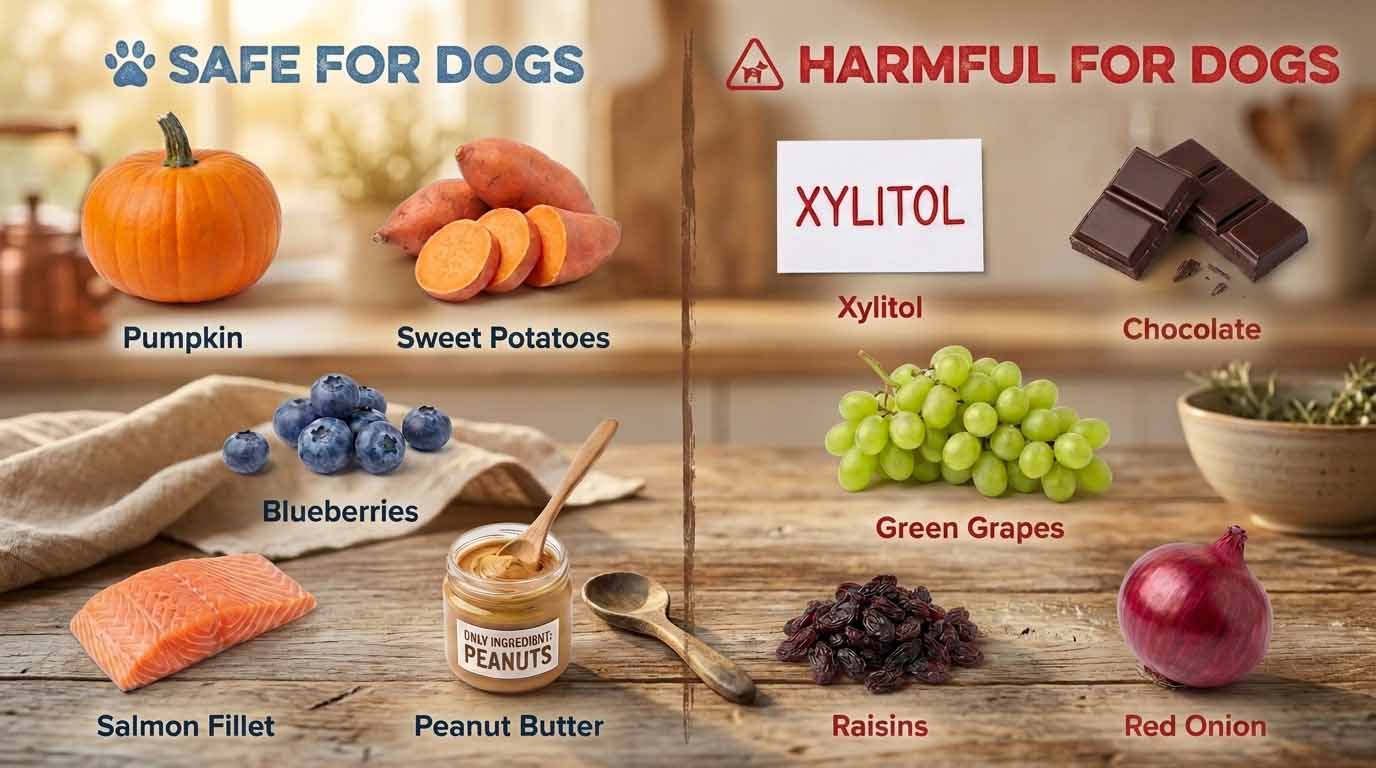
10 Healthy Dog Food Ingredients Every Dog Owner Should Look For
1. Pumpkin
Pumpkin is one of the best natural ingredients for dogs. It's rich in fiber, vitamin A, potassium, and antioxidants. Pumpkin helps support healthy digestion and is commonly used as a gentle source of fiber.
Benefits
- Supports digestion
- Rich in fiber
- Low in calories
- Packed with vitamins
2. Sweet Potatoes
Sweet potatoes are an excellent source of dietary fiber, vitamin A, vitamin C, and complex carbohydrates.
Benefits
- Long-lasting energy
- Healthy digestion
- Rich in antioxidants
- Easy to digest
3. Blueberries
Blueberries are often considered a superfood because they're loaded with antioxidants.
Benefits
- Supports overall wellness
- Rich in vitamins
- Low-calorie snack
- Great training treat
4. Salmon
Salmon provides high-quality protein and omega-3 fatty acids.
Benefits
- Healthy skin
- Shiny coat
- Supports brain function
- Lean protein source
5. Eggs
Eggs provide complete protein along with vitamins and minerals.
Benefits
- Muscle support
- Highly digestible
- Rich in nutrients
- Great protein source
6. Carrots
Carrots contain beta-carotene, fiber, and vitamin A.
Benefits
- Eye health
- Crunchy training treat
- Supports immune health
- Low in calories
7. Oats
Oats provide fiber and important nutrients while being gentle on many dogs' digestive systems.
Benefits
- Digestive support
- Slow-release energy
- Naturally nutritious
8. Flaxseed
Flaxseed is a natural source of omega-3 fatty acids and fiber.
Benefits
- Healthy skin
- Healthy coat
- Digestive support
9. Apples (Without Seeds)
Apples offer fiber and vitamin C while providing a naturally sweet treat.
Benefits
- Fresh snack
- Rich in fiber
- Low in fat
Always remove the seeds and core.
10. Plain Peanut Butter (Xylitol-Free)
Most dogs love peanut butter, making it an excellent high-value reward.
Benefits
- Healthy fats
- Protein
- Vitamin E
- Excellent training reward
Always confirm the peanut butter contains no xylitol.
10 Ingredients to Avoid in Dog Food or Treats
Not every ingredient belongs in your dog's diet. Some foods are toxic, while others should simply be limited.
11. Xylitol
Xylitol is one of the most dangerous ingredients for dogs.
It can cause a rapid drop in blood sugar and is a veterinary emergency.
12. Chocolate
Chocolate contains theobromine, which dogs cannot metabolize effectively.
Never intentionally feed chocolate.
13. Grapes
Even small amounts of grapes may cause serious illness in some dogs.
14. Raisins
Like grapes, raisins can be highly toxic.
15. Onions
Onions can damage red blood cells and should always be avoided.
16. Garlic
Garlic belongs to the same family as onions and may also be harmful, particularly in larger amounts.
17. Excess Salt
Too much sodium can contribute to dehydration and other health problems.
18. Artificial Food Dyes
Artificial colors add visual appeal for people—not nutritional value for dogs.
Many owners prefer treats without unnecessary dyes.
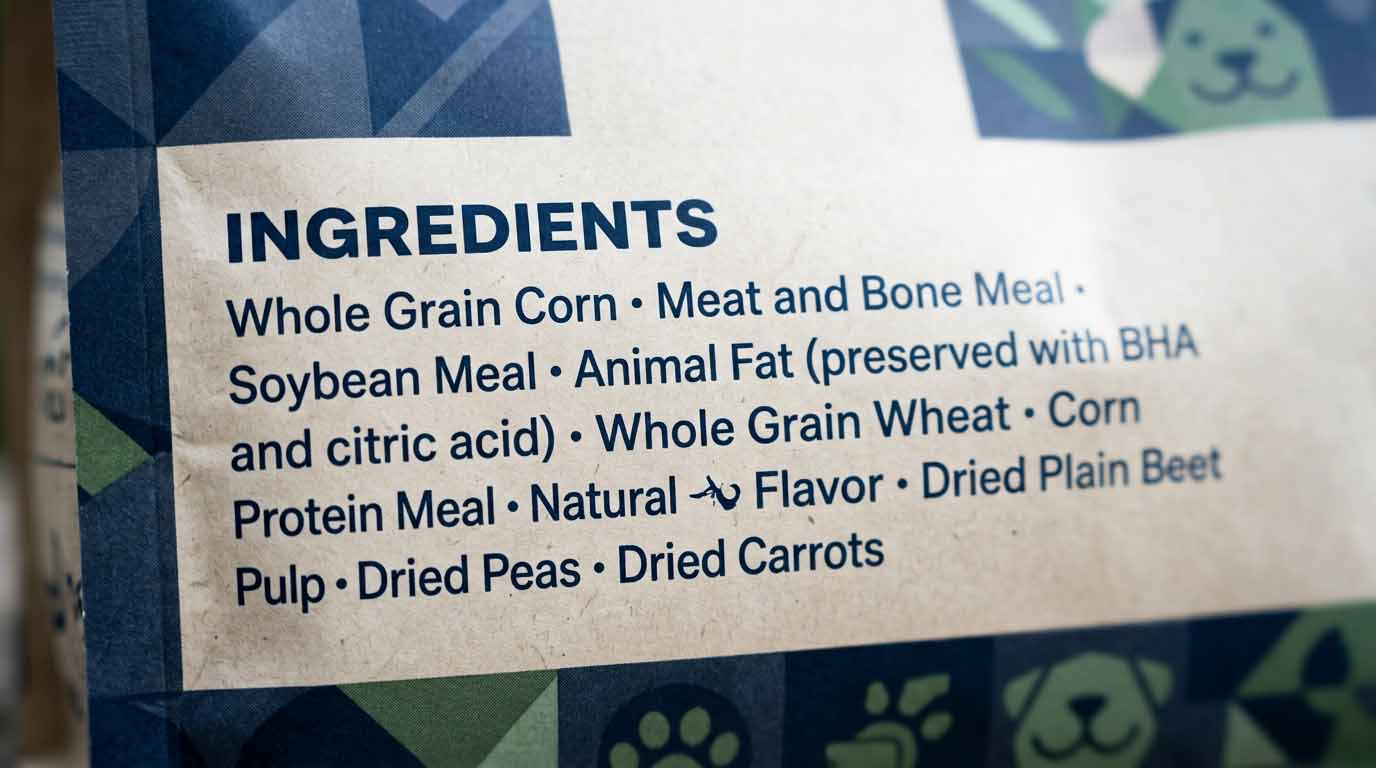
19. Artificial Preservatives (BHA & BHT)
Some pet owners choose products without synthetic preservatives and instead look for naturally preserved recipes.
20. Excess Added Sugar
Dogs don't need added sugars in their treats.
Too much sugar can contribute to excess calorie intake and dental issues.
How to Read Ingredient Labels
Reading ingredient labels is one of the easiest ways to identify healthy dog food ingredients and recognize ingredients to avoid in dog food.
When shopping, look for:
- Quality protein sources
- Recognizable ingredients
- Fruits and vegetables
- Healthy fats
- No unnecessary artificial colors
- No unnecessary artificial preservatives
- Limited added sugars
The shorter and more recognizable an ingredient list is, the easier it is to understand what you're feeding your dog.
Why Simple Ingredients Matter
Simple ingredients often provide greater transparency. Instead of trying to decode unfamiliar additives, you can recognize foods like pumpkin, blueberries, carrots, salmon, and oats.
This is one reason many dog owners seek treats made with wholesome, thoughtfully selected ingredients.
At Furswell®, we believe every reward should start with ingredients you recognize and trust. Our handcrafted, small-batch treats are made with simple ingredients because quality matters just as much as taste.
Final Thoughts
Understanding natural ingredients for dogs gives you the confidence to make better decisions every time you choose food or treats. By recognizing healthy dog food ingredients and learning about ingredients to avoid in dog food, you'll be better prepared to select products that support your dog's overall health and well-being.
No single ingredient determines whether a food is right for your dog, but paying attention to ingredient quality, reading labels carefully, and choosing products made with wholesome ingredients can make a meaningful difference over time.
At Furswell®, we're committed to crafting small-batch dog treats with simple, carefully selected ingredients because we believe every tail wag deserves a treat made with care.